
“Wahoo” Entry #6
Greenscreen Shoot One & Two
In this entry, I’ll discuss shooting the Bolt-HF-Roam sequence while overcoming setbacks.
Firstly, collaboration with the SCAD cycling team has been excellent. I am extremely grateful to Laura Croll for acting, and Head Coach Mike Buechel for supplying the Wahoo trainer for filming. Without their help, this project would not be feasible.
For filming, I ultimately decided against shooting this sequence outdoors. I have previously taken test footage outside with the understanding that using natural light is the best way to convey natural lighting. In practice, there bottlenecks occurred.
Shooting outside requires the pop-up greenscreen. It moves from the slightest wind. I don’t want to completely rely on roto. Because the camera move is so extreme, I need immobile tracking markers to ensure proper integration with CG elements.
Tracking, along with filming logistics, simply made the greenscreen the best option. Consider it an exercise in studio lighting.
I wanted the lighting to reflect the joy of starting to ride. Sunset and sunrise capture this feeling. Just like low sun, the first few pedal strokes leave anxieties behind. There is also the added bonus of shadows hiding some detail.
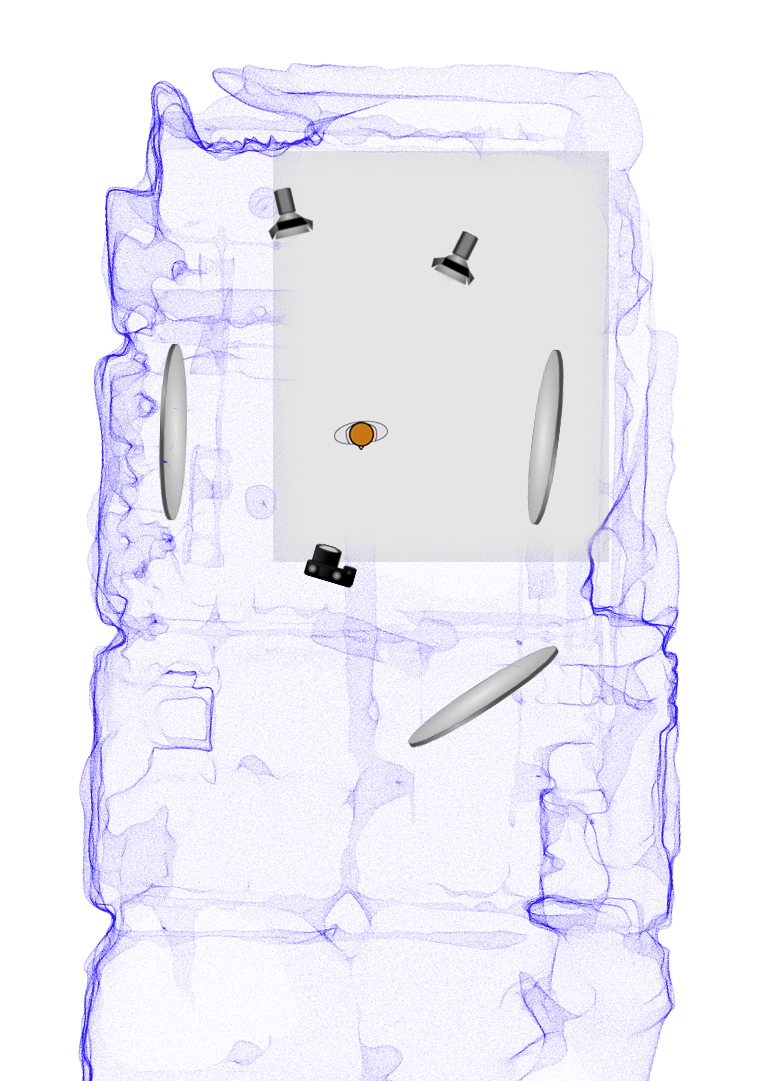
To ensure an efficient shoot, I preplanned the lighting setup with a digital stand-in. To ensure that the setup worked within the greenscreen room, I took a quick scan to use as a blueprint.
Throughout the practical lighting planning process, I researched through forums, subreddits, and blogs. Roger Deakins’ “Look at Lighting” blogsite is a fantastic resource. If I were to go back in time, I would visit his demonstration of practical lighting techniques for the WALL-E team. Sir Roger Deakins, if you are reading this, I would love to see a post about Jarhead and 1917.
I queried ChatGPT with specific questions about approaching the scene. A provided list of the available resources provided another perspective.
Then I shot. There were a myriad of issues that I am truly embarrassed to detail:
Lighting:
Unexposed histogram and greenscreen
Ineffective Rim Light direction
Extreme spill from periphery lights
Lens flare
Tracking/Roto:
Complicated background for roto/copycat.
Improper camera track markers.
Camera:
Extreme camera shake.
Slow camera dolly
All right. Lets do this one last time. Or, as the mountain bike community says for good luck, two more runs, skip the last. I opted for a re-shoot and Laura graciously agreed. I had a new game plan.
Camera
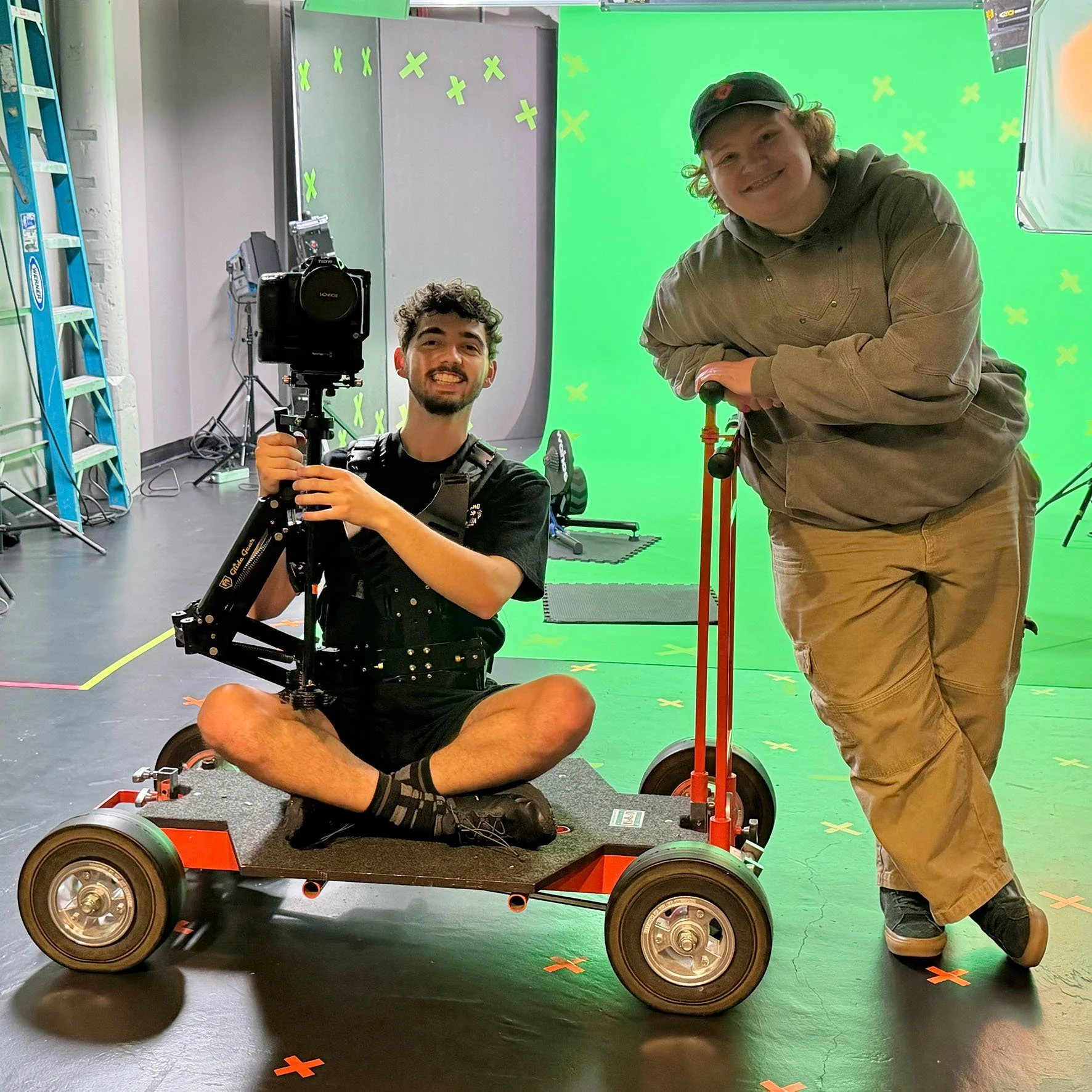
First, I addressed the shaky camera. My use of the Glide Gear DNA 5050 and chest rig required both hands on the supports. Because I didn’t have a focus puller, I needed to take a hand off the counterweight support to manipulate the ring. Now unable to direct the direction of the camera, I opted to simply hold the camera like I would on photowalks.
Additionally, there is a large dolly backward. My lack of clean footwork and Blackmagic Focus Demand proved incompatible.
So I recruited friend and compositor, Wren Pellant. I sat on a cart and focussed on framing and focus as Wren dollied backward. This took care of the speed of the camera move. There was an unavoidable bump on the floor that was lessened by laying down carpet padding.
Lighting
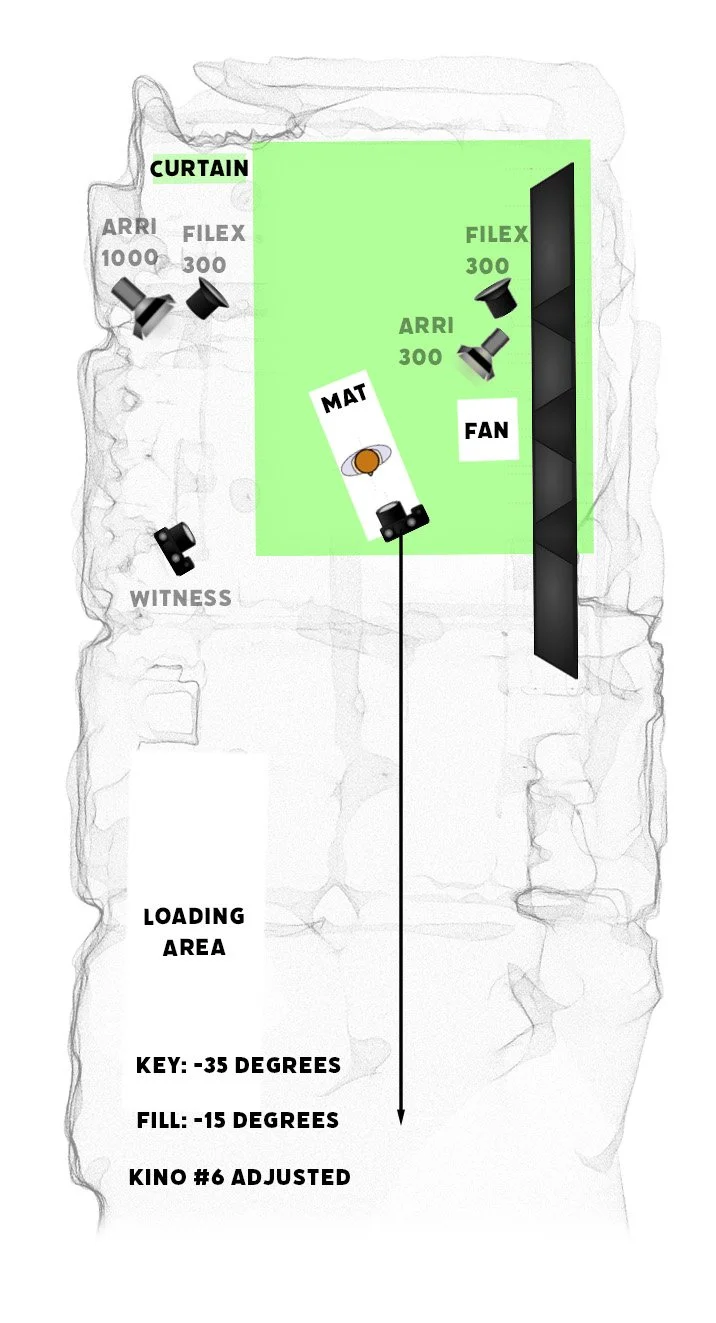
My intention for the lighting was reframed before the reshoot. I opted for a steeper key light to get more wrap around Laura. There was also less risk of underexposure. The steeper key light allows me to play with the height of the skyline in post.
At first, I regretted not having a 1/4 CTO filter on the key light. In practicality, the aperture would have to open because of the restricted light. A diffused rim light gave slight definition while defining hair.
During the first shoot, I stopped down to emulate an aperture used outdoors. It was not enough light to provide sufficient information. Greenscreen fill lights and a slightly wider aperture alleviated this problem. I also tried to use two Arri 1000W to emulate a strong distant light. There were two shadows without diffusion. The idea was scrapped.
Otherwise, I temporarily disconnected the daisy chained kino lights that spilled onto the lower arms and bike frame. I left the overhead lights on in the adjacent motion capture stage to illuminate tracking markers.
Tracking / Roto:
In terms of tracking, I had two major blunders. First, I placing non-green tape behind the actor’s hair. Second, I had little mid-ground tracker markers.
The narrow depth of field made tracking the beginning difficult with or without markers. I opted to block visual information behind the actor in at the start with a black vcard. In the off chance that tracking information would be usable, I placed markers on it. Regardless, this is an easier solution for Modnet and Copycat to decipher an alpha.
After covering the floor in bright markers, I outlined the periphery of the greenscreen in slightly darker green tape. These greenscreen markers were Nuke’s first discarded tracks. Regardless, I understand the proper method now.
Besides the principal photography, I took colorchart and checkerboard plates. I scanned the room so that I would have an accurate 3D representation of the light placement and scale. Laura was very patient with me as I scanned her and her bike on the trainer.
In all, the experience was a success. It was undoubtedly a learning opportunity. By class five, I am aiming to have a slap-comp with this footage and more I will be taking this weekend. Cheers.